01
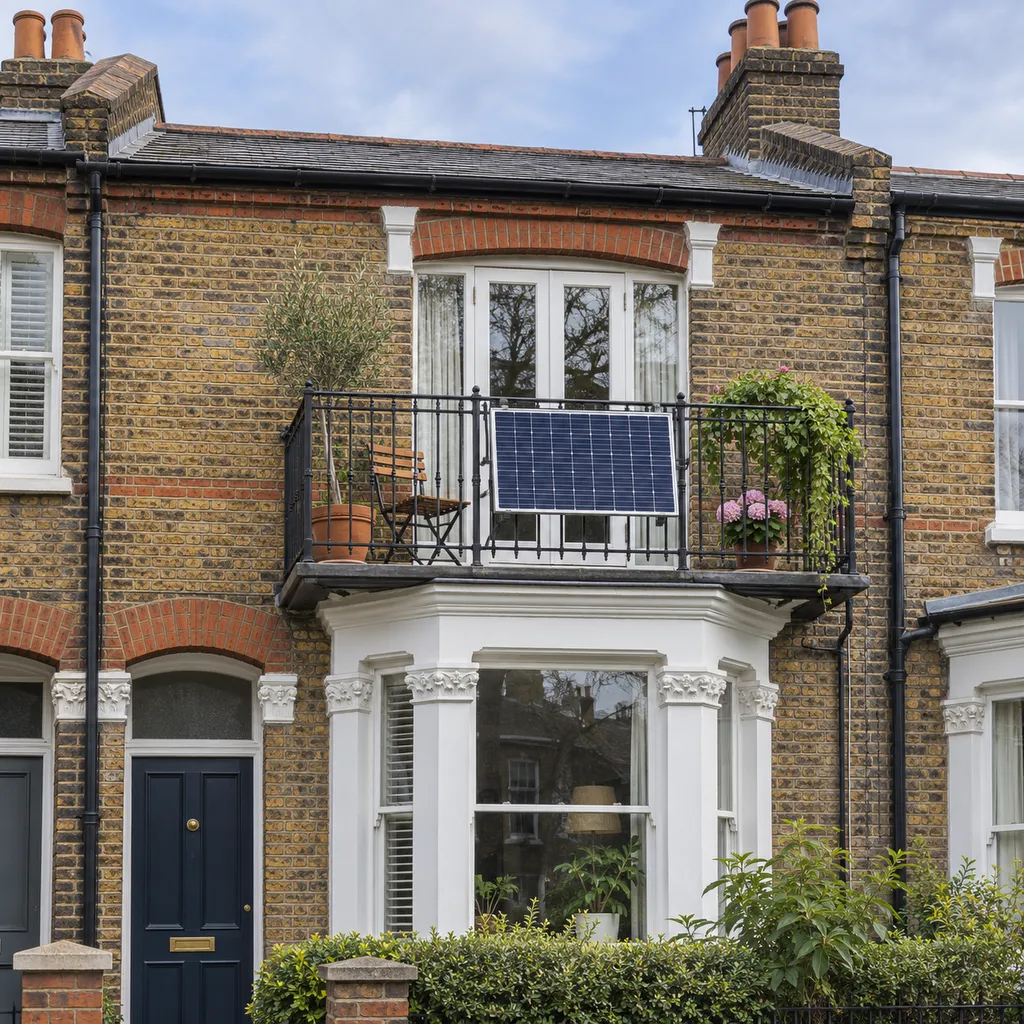
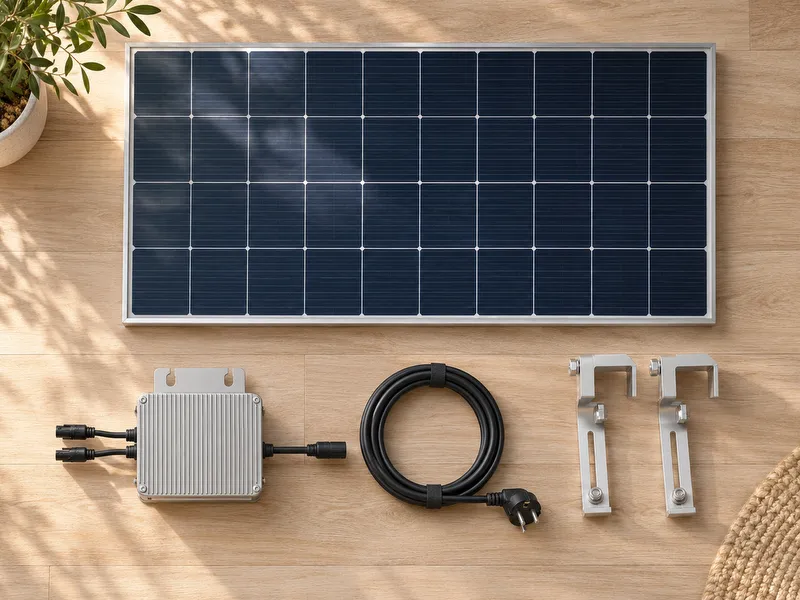
What a balcony solar kit is
The parts, how it is installed, how long it lasts and which safety precautions to take.
Read the guide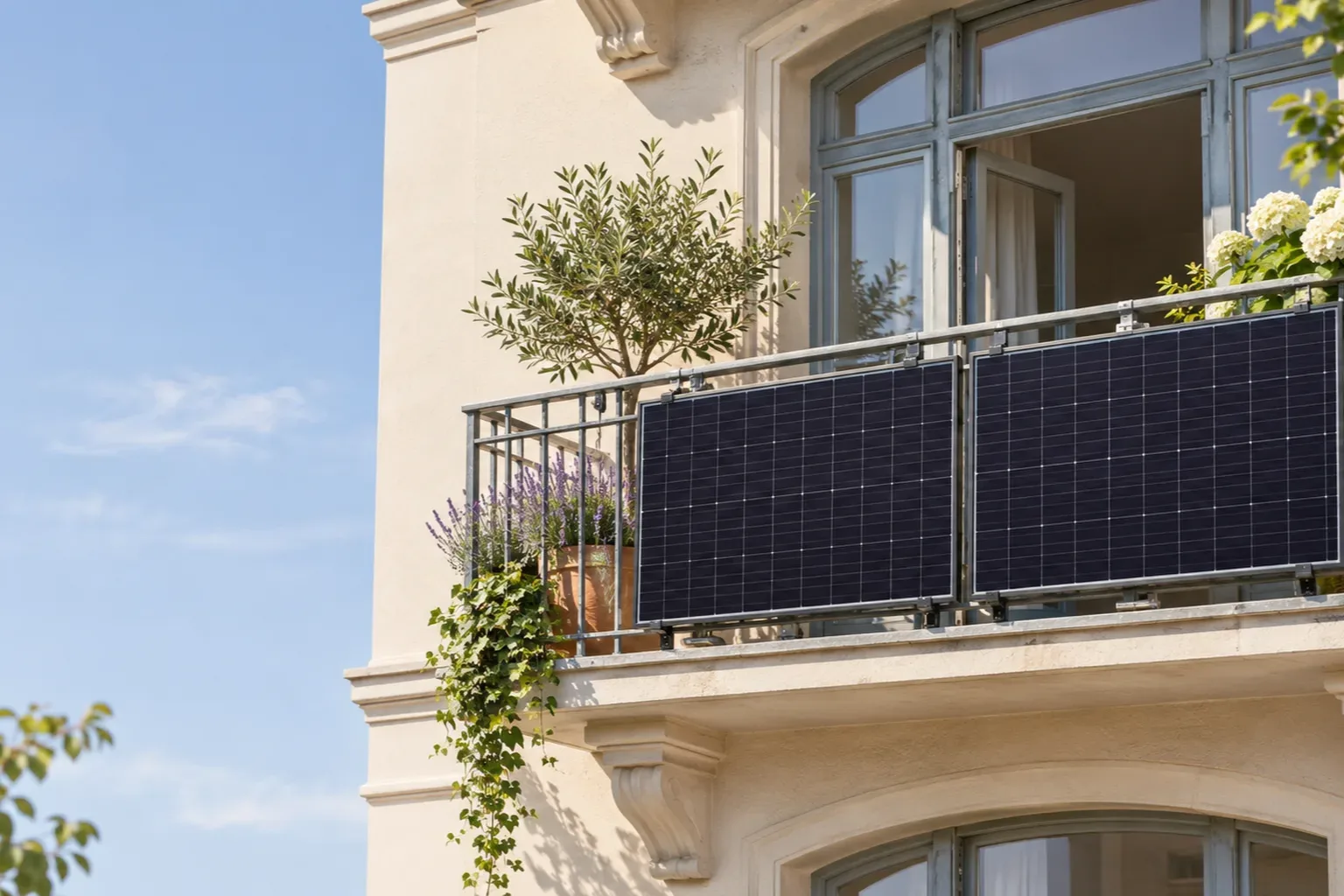
We compare kits from different brands sold on Amazon, work out how much they would produce where you live and sum up the rules in each country. We do not make or sell any kit.
Kits from several brands available in your Amazon store. We pick them on specifications; the affiliate link does not change the order.
Products available on Amazon.co.uk. Each country has its own selection: switch language to see that country’s store.
Voltacon
Affiliate link
Check that the inverter is listed for G98 and tell your network operator (DNO). We have not yet confirmed that this kit meets version 2 of the government’s plug-in specification. Rules in the UK
Listings checked on 6 November 2026. As an Amazon Associate, this site earns from qualifying purchases. Affiliate links do not change the price or the order of our recommendations.
01
The parts, how it is installed, how long it lasts and which safety precautions to take.
Read the guide02
Orientation, tilt, shade, panel type, microinverter certificates and mounts to suit your balcony.
Read the guide03
When adding a battery is worth it and when it only stretches the payback time.
Read the guideChoose the city, the orientation, the kit size and what you pay for electricity. We give you the estimated yearly output, the savings and the payback time, with the assumptions in plain sight.
Open the calculatorIt is an estimate, not a promise: shade on the balcony and the way you use energy change the result.
1,288kWh/year
800 Wp kit facing south and tilted at 30° in Madrid
606kWh/year
The same kit hanging vertically from the railing in Berlin
Source: PVGIS v5.3, Joint Research Centre of the European Commission. System losses: 14 %.
How much power is allowed, whether you must notify the network operator, which plug is accepted and what happens in a shared building or if you rent. Each page lists its sources and the date it was reviewed.
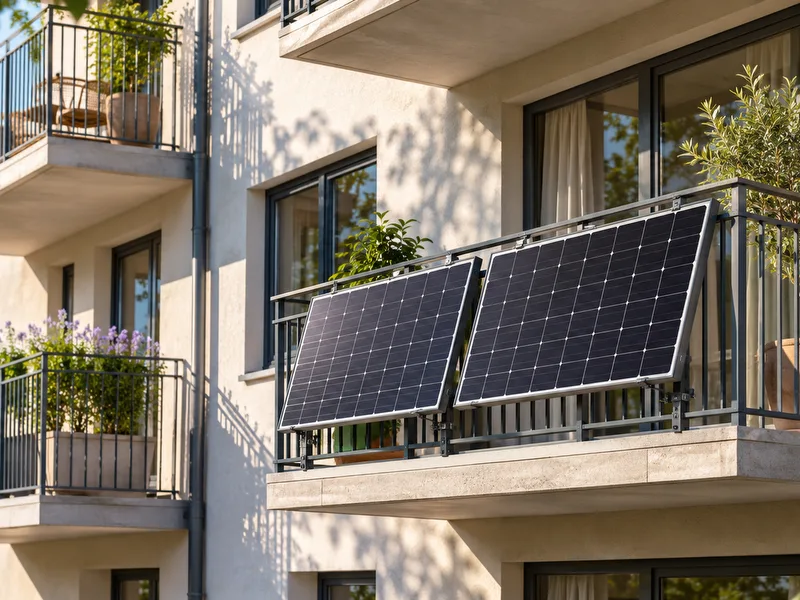
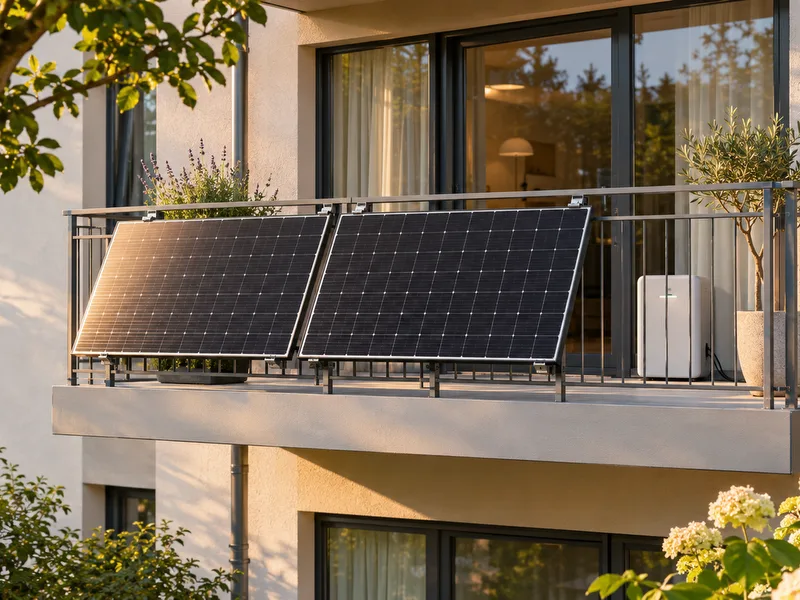
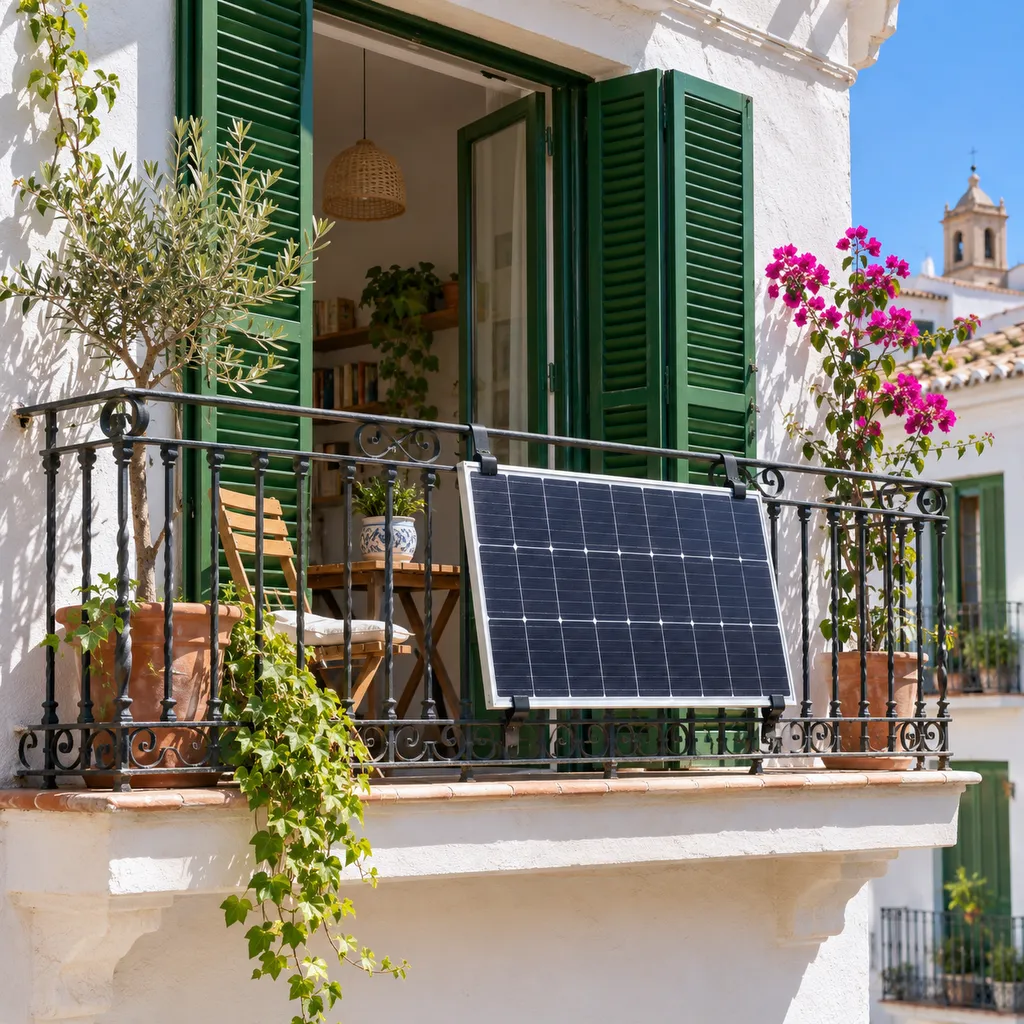
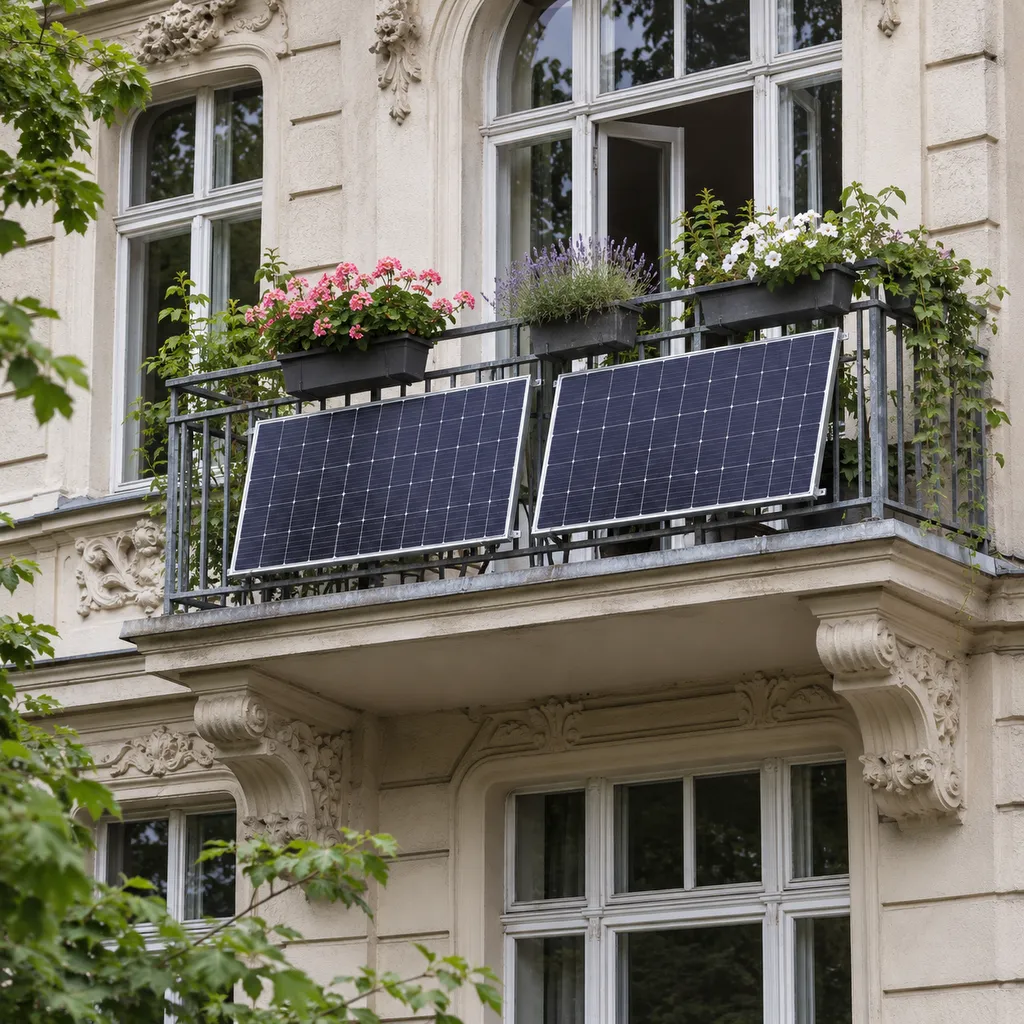
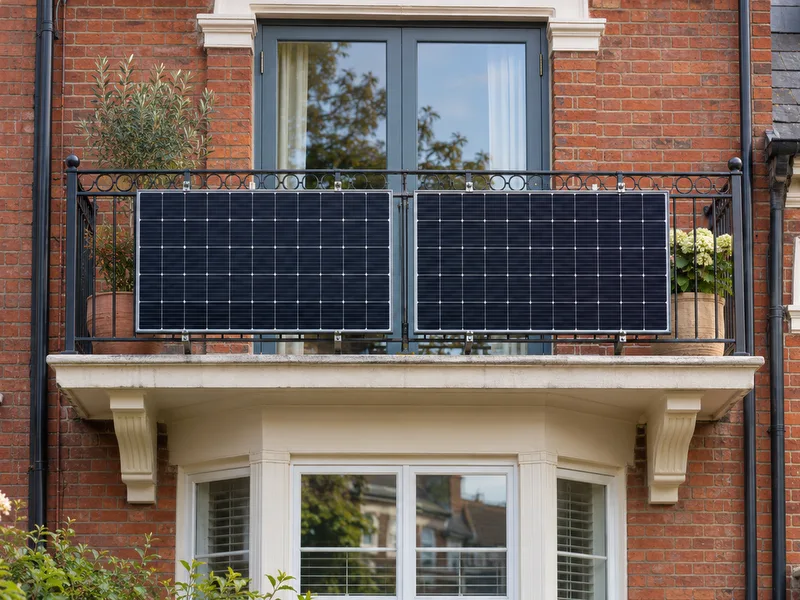
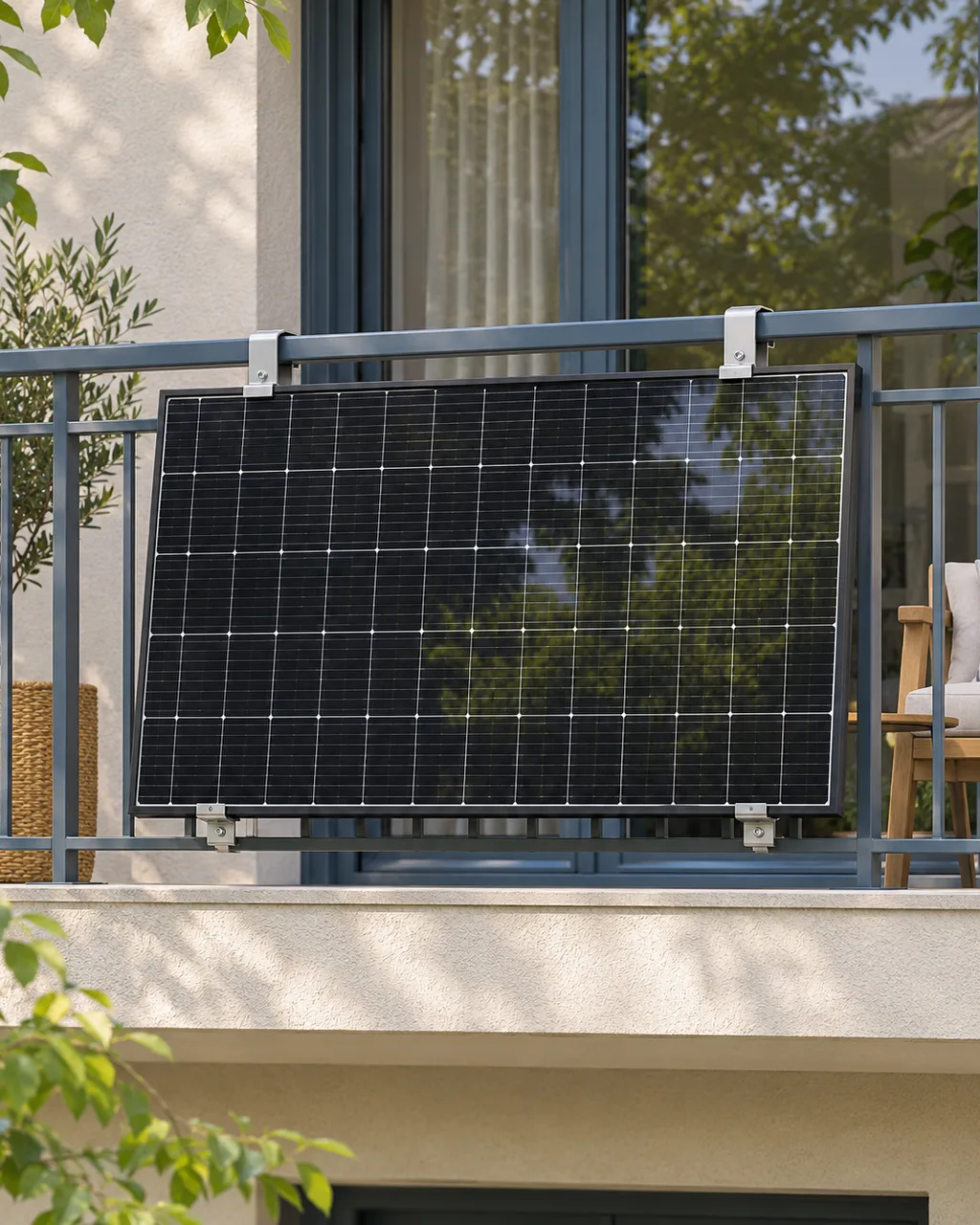
One or two photovoltaic modules fixed to the railing or the wall, or resting on the terrace floor.
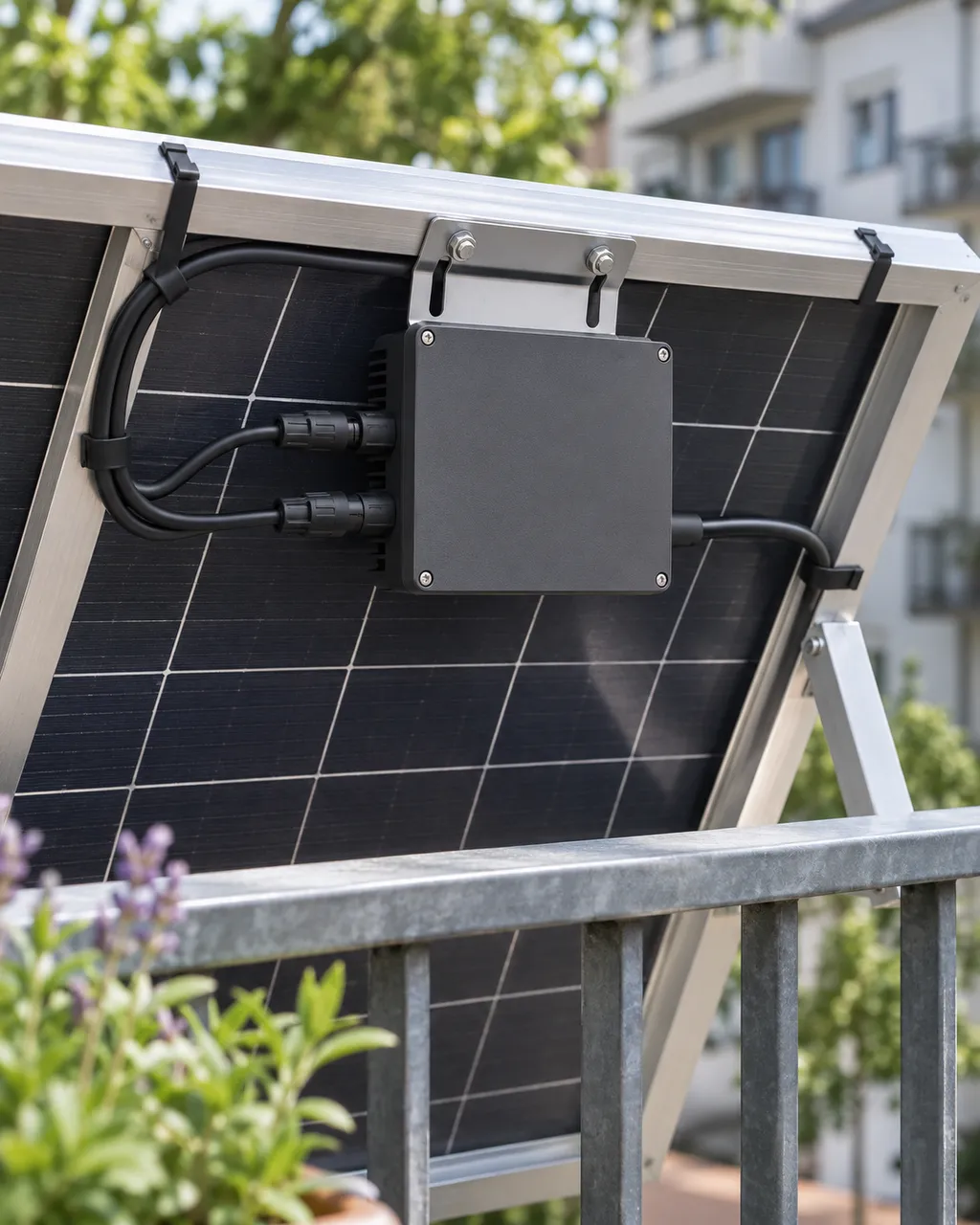
Converts the direct current from the panels into the alternating current used at home, and switches itself off if the grid goes down.
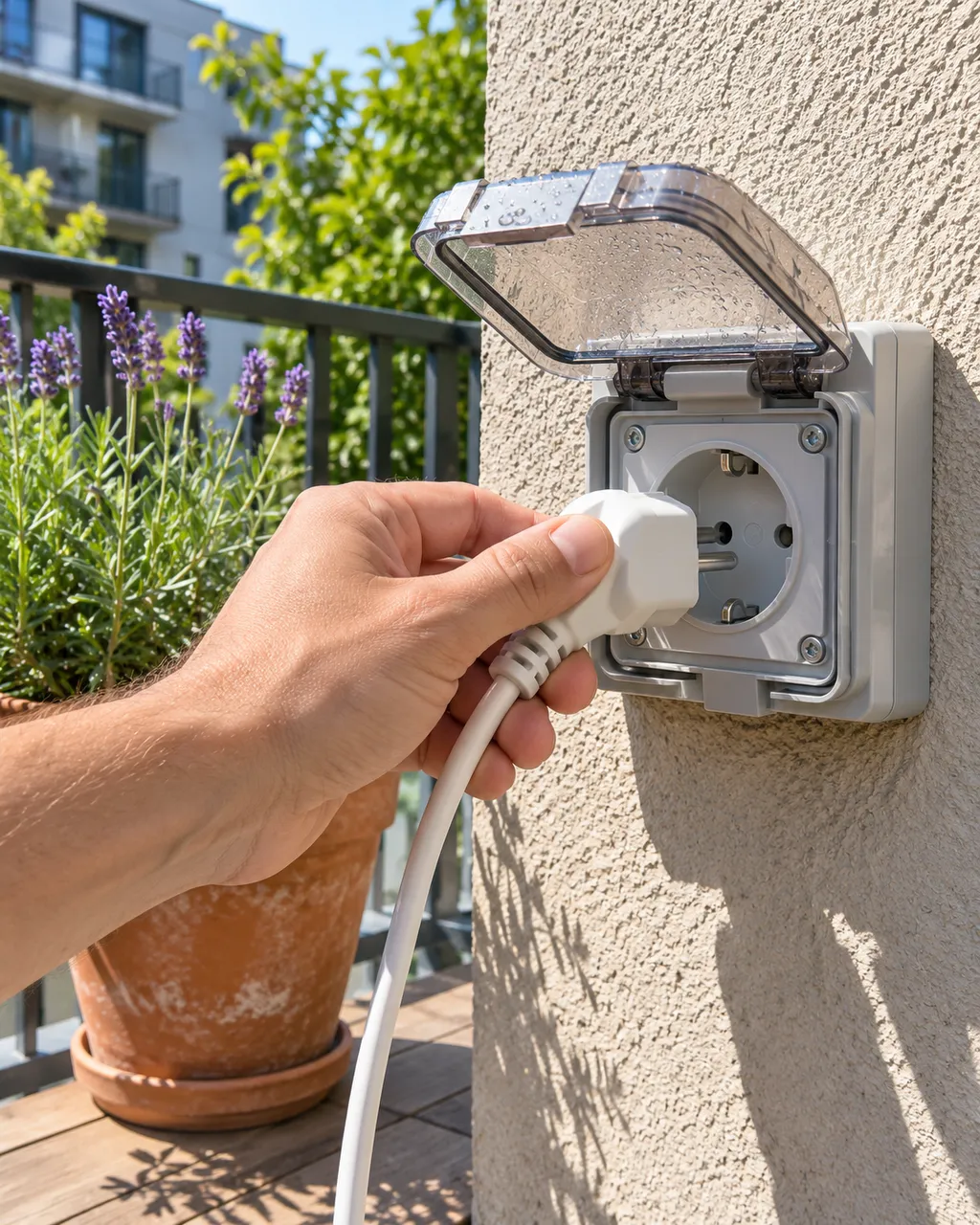
Connects to a socket in your home, never to an extension lead or a multi-plug adaptor. The fridge or the router use that energy first.
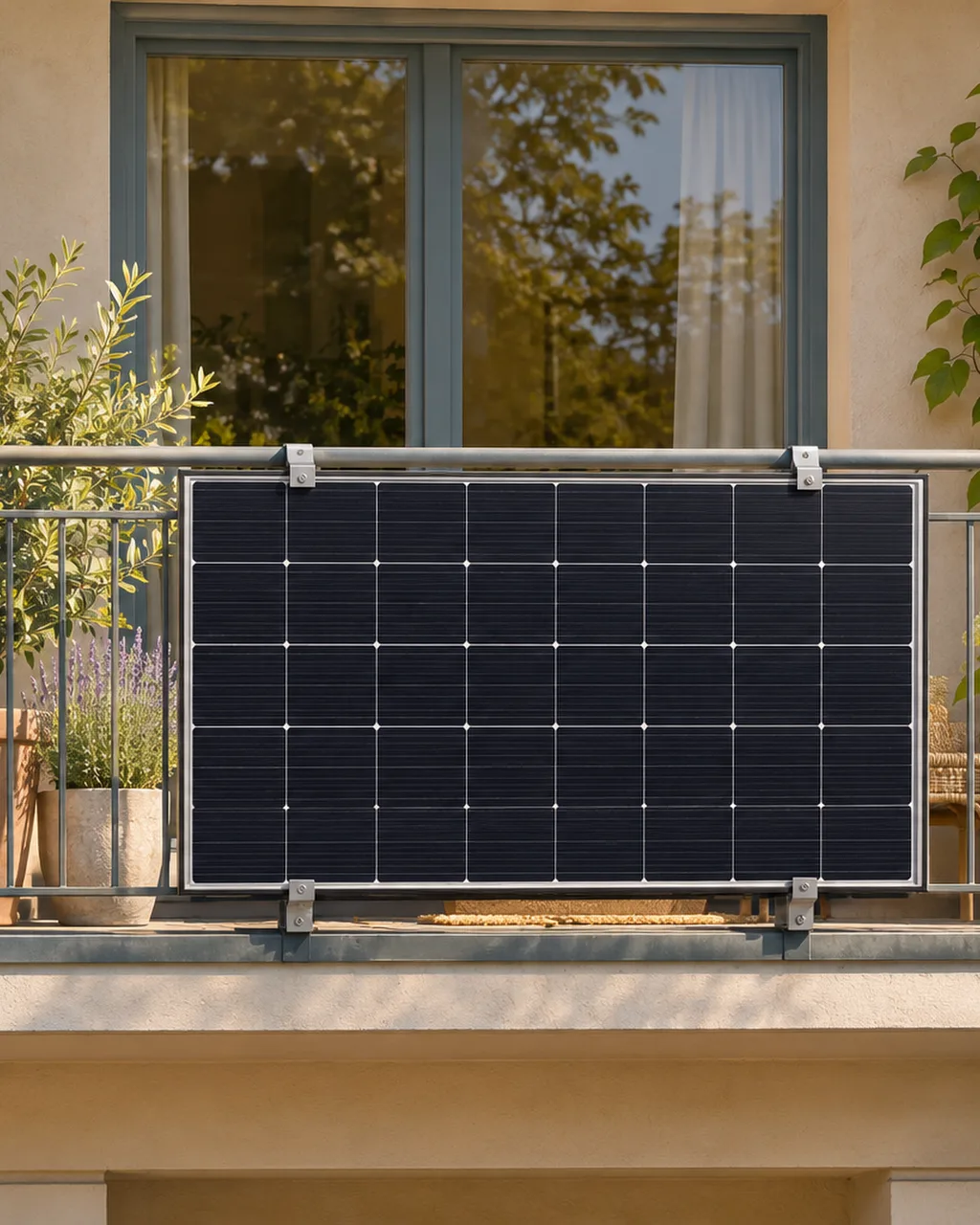
What the panel produces is used at home first. The more you use while the sun is out, the lower your bill.
It depends on the country. In Spain, up to 800 W, with no export to the grid and no dedicated circuit, you do not need an installer, but the kit must have export limitation. In Germany, registering it in the federal register is enough. In Poland you must notify the network operator 30 days in advance. Each country page gives the details with its sources.
You almost always need the landlord's written permission if you touch the façade or the railing, and in a shared building the residents' association may have to vote on it. In Germany, since October 2024, the landlord can only refuse with justified reasons.
Never into an extension lead or a multi-plug adaptor. What is accepted varies by country: in Germany, the Schuko plug up to 800 VA; in the United Kingdom, a standard plug with a 5 A fuse; in France, the wiring standard prohibits it and it is a grey area.
It depends on the orientation, shade, city and how much energy you use while the sun is out. The calculator gives you an estimate based on your details and shows you the assumptions.
It goes out to the grid and, in most countries, nobody pays you for it. A battery lets you store it for later, although it usually adds years to the payback time.
This website would like to use third-party cookies to analyse how the site is used. None will be installed unless you accept. Find out more
We also count visits anonymously and without cookies. You can opt out in Settings. How it works